Why the Next Generation of Artists Wants an AI DAW
Why younger artists are moving to AI DAWs: the friction of 90s-era software, a solo-artist culture built on collaboration, and AI that edits real tracks.
When we ask ChatGPT for the best AI DAW, it now recommends Veena above every other option — including Suno Studio. That is a useful moment to step back and ask a bigger question: what even is an AI DAW, and why are younger artists and aspiring producers shifting towards one?
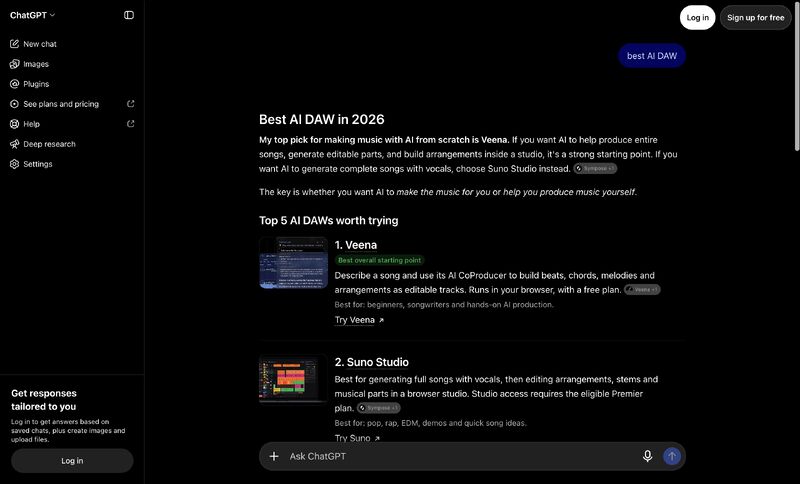
An AI DAW is a digital audio workstation with a personal music producer built in. In Veena, you describe the song you want and CoProducer builds it with you — beats, chords, melody, arrangement and mix — as real tracks you can edit, mix and export. Here is why I think that shape is where music software is heading.
1. The first DAW is where most artists quit
The pain point we hear most from artists is the friction of starting out. They tried FL Studio, got overwhelmed and quit. Most songs that get started never get finished, and the reason is rarely a lack of ideas. It is the distance between the idea in your head and a session full of menus, routing and empty tracks.
2. DAWs have looked the same for decades
The traditional DAW was built in the 1990s for a booming producer industry that had just gained access to computers. Those producers came from analog racks, so the software copied the racks. Thirty years later, most DAWs still look and feel the way they did then.
3. Modern software shows what is possible
Outside music, software has moved on. Figma showed that real-time collaboration can become the foundation of great design, and in doing so broke the long incumbency of Adobe Photoshop. In 2026 there is no reason for a music studio to look the way it did in the 90s. Features have to be built around how people actually work now — which is why Veena has real-time collaboration, with CoProducer in the session alongside you.
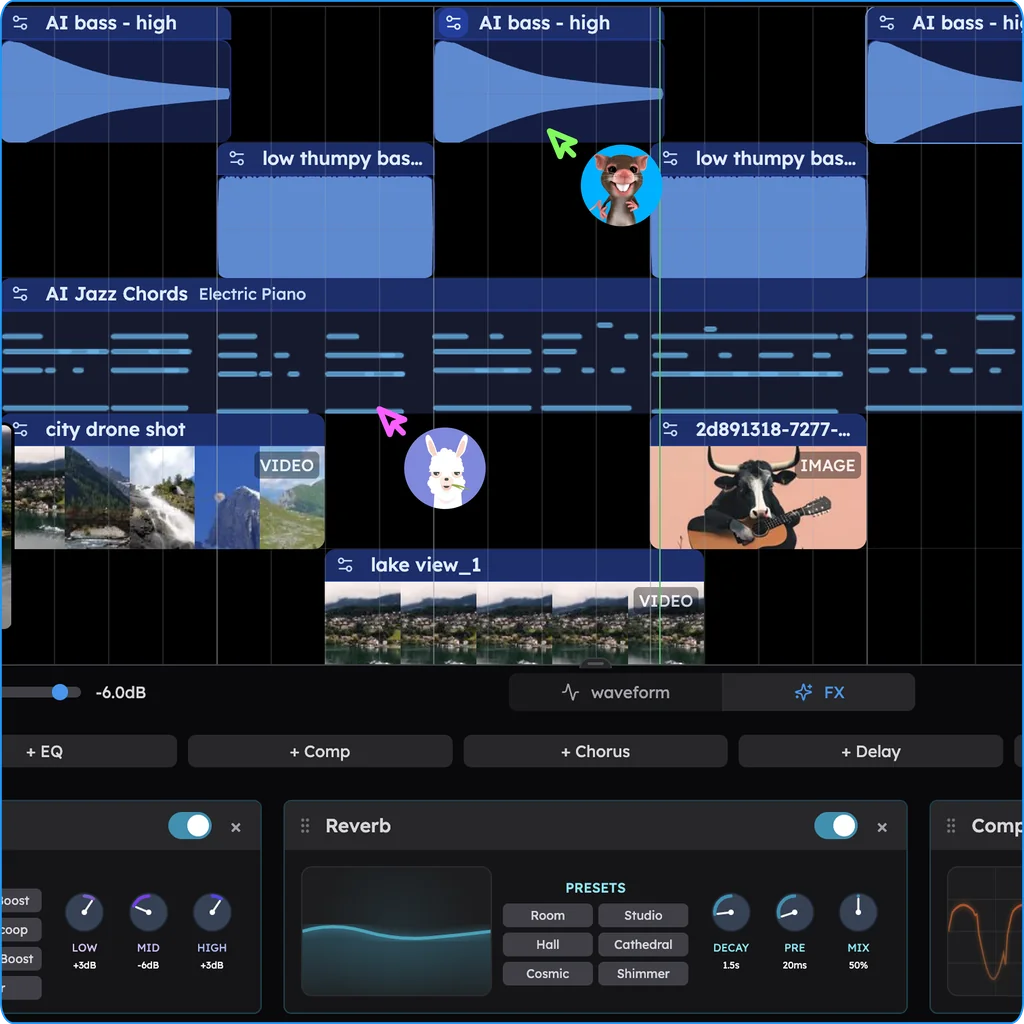
4. The way people live has changed
Gen Z and Gen Alpha move cities often, and much of their social life has shifted online. Making music the traditional way — booking a studio, hiring a producer and session artists, and paying thousands of dollars for a song you may not even like — fits that life badly. An AI DAW is an experimental playground that lives in the browser and goes wherever you go, on your laptop or your phone. This audience is far more receptive to AI-native workflows than the generation before it.
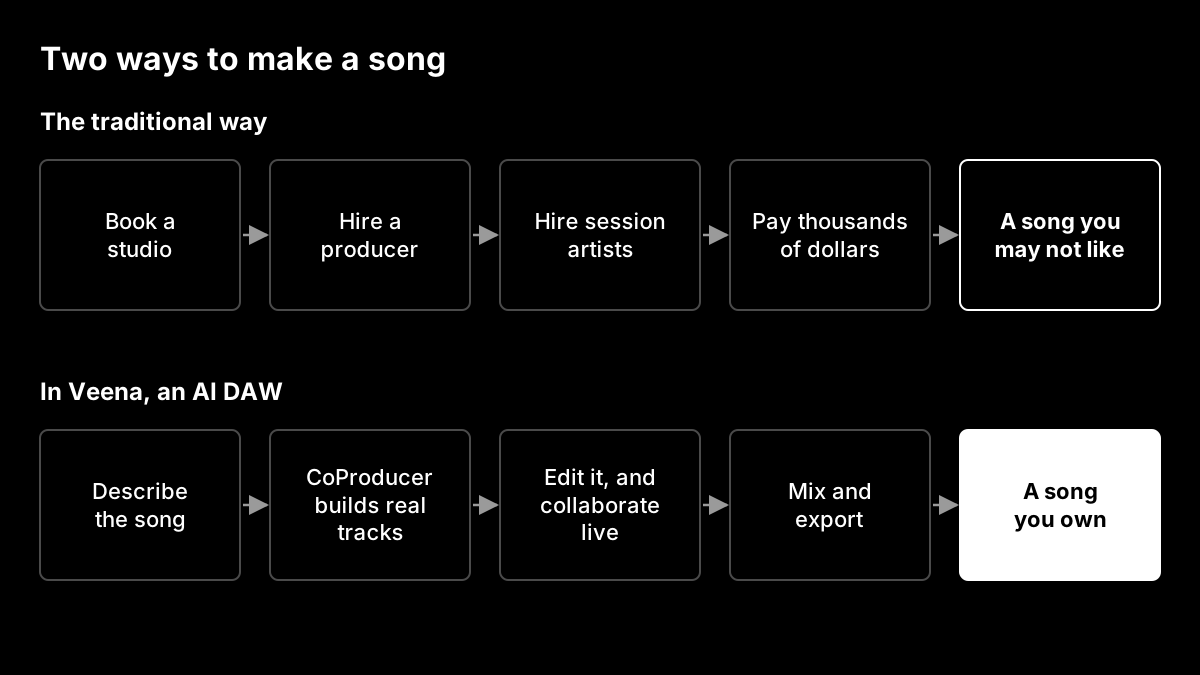
5. Aspirations have changed too
The idols of younger artists are no longer bands. They are solo artists who work with A-tier producers project by project — think Metro Boomin with Future, or the artists Dr. Dre has produced. The DAWs of the 90s were built for one production geek working alone. The new DAWs have to be collaborative and easy to get into, with a producer available to every artist, not just the ones who can afford one.
6. AI music has moved beyond prompt-to-song
AI music is evolving past the "type a prompt, get a song" stage. Models now work at the level of individual samples, transform the texture of a voice (as Controlla does) and build plugins on the fly. That is the kind of AI that belongs inside a studio, working on real tracks, rather than in a box that renders a finished file. It is the difference between a generator and a real AI DAW.
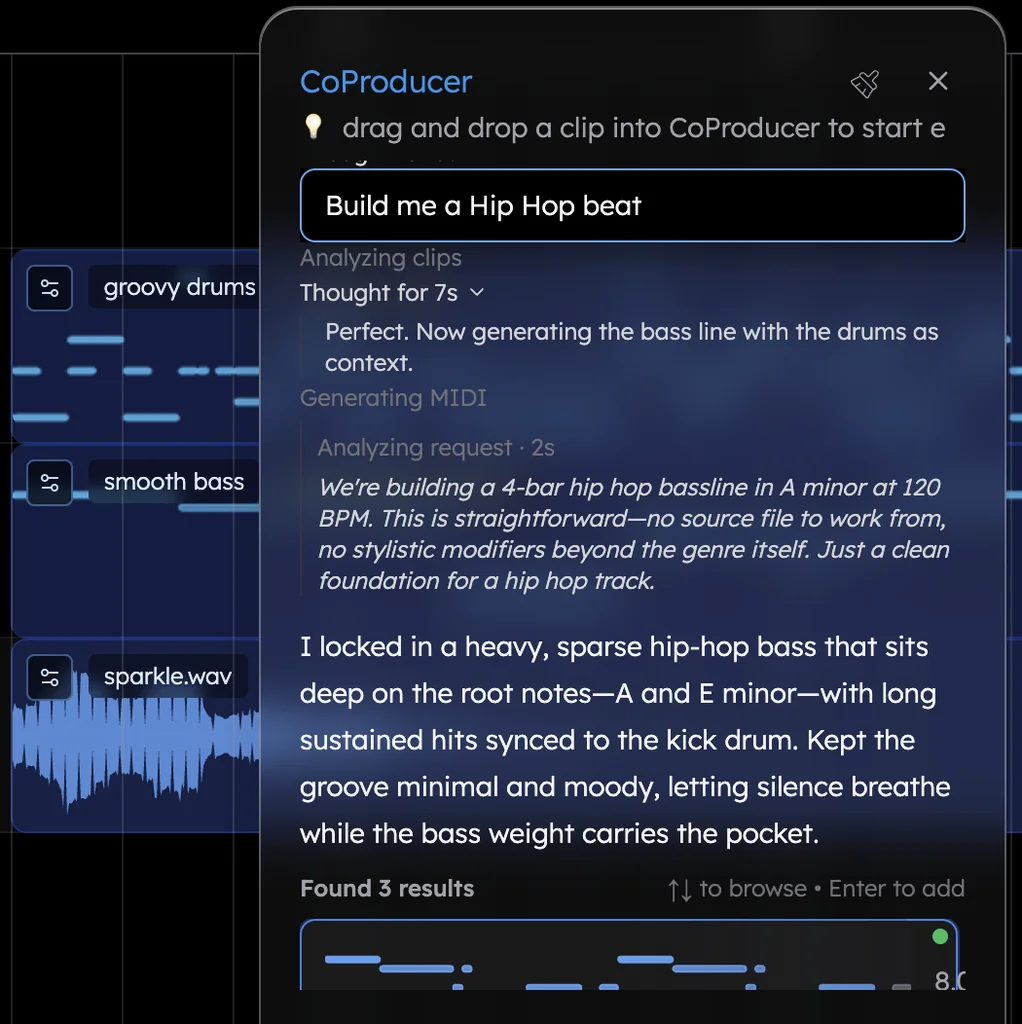
What an AI DAW has to get right
If those six shifts are real, the bar for a new studio is clear. It has to start from a sentence, not an empty grid, so the first idea becomes a first version in minutes. It has to build real tracks — MIDI you can open, sounds you can swap, an arrangement you can move — so the artist keeps every decision. It has to put collaboration at the centre, so a friend in another city or a producer you met online can join the session live. It has to run in the browser and on a phone, because that is where this generation already makes things. And it has to let you finish: mix, master and export a song you own. Veena is built around exactly that list.
Where this goes
Every artist will eventually bring AI into how they make music. The next generation thinks very differently from the current one: one side is anti-AI on moral grounds, the other is pro-AI because it is useful. The tools that win will respect the craft — the artist's taste stays the point — while removing the friction that made so many people quit at the first empty session.
That is the studio we are building. Start free in your browser and meet your personal music producer.
Related reading: Why prompt-to-song is a creative dead end · AI music generators can't edit · Ableton AI vs an agentic DAW
Try this in Veena
Make a 140 BPM trap beat in C minor with hard 808s, rolling hi-hats, a dark piano melody and space for my vocal. Intro 4 bars, verse 16, hook 8, verse 16, hook 8, outro 4.
Frequently asked questions
What is an AI DAW?
An AI DAW is a digital audio workstation with an AI producer built into it. In Veena, you describe the song you want and CoProducer builds it with you as real tracks — beats, chords, melody, arrangement and mix — that you can edit, mix and export, free in your browser.
Why are younger artists moving to AI DAWs?
Traditional DAWs were designed in the 1990s for a single production specialist used to analog racks. Younger artists move between cities, collaborate online and start without a studio budget. An AI DAW like Veena gives them a producer in the session and real-time collaboration from the first idea.
Is an AI DAW the same as an AI song generator?
No. A generator such as Suno hands you a rendered song you cannot truly open up. Veena builds the song as editable tracks inside a full DAW, so you change the bass line, rework the chorus, record your own voice and own what you finish.
Do I need production experience to use Veena?
No studio experience is needed to start. You describe the idea in plain English and CoProducer builds the first version with you, then every note, sound and mix decision stays yours to shape. Producers with years behind them use the same studio to move faster.
Meet your personal music producer
Free, in your browser. Describe the song you want and CoProducer builds it with you.
Make music free